
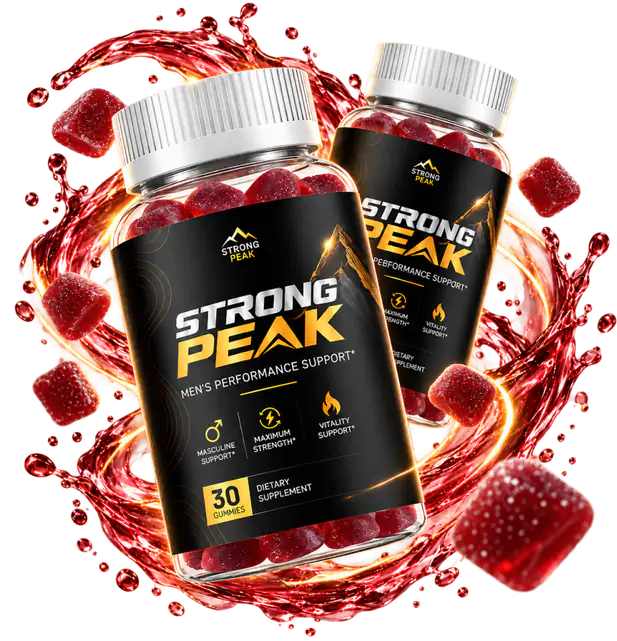
Strong Peak contains ingredients with research backgrounds, but that does not by itself establish a health result from the finished gummy. A study of ginseng, maca or citrulline answers a question about the preparation tested, not every supplement that includes the same name.
The word works also needs definition. A gummy can be convenient to use. A seller can deliver the correct package. A formula might be claimed to change energy, stamina or a clinical measurement. Each statement requires different evidence, and success in one category cannot establish another.
Begin with the exact outcome you care about. Then examine whether the evidence matches the product, dose, participants and comparison. This approach allows a proportionate decision without turning either ingredient interest or missing information into a sweeping verdict.
Put the claim into one sentence
General wellness language can contain several possible expectations. Before evaluating it, write down the actual result being implied. Is the claim about fatigue, exercise, sexual function, convenience or something else?
Then ask what observation would establish it. If the outcome cannot be described clearly, the claim is too broad to carry much weight in a serious health decision. A statement that someone feels more like himself is meaningful as personal expression but difficult to assess as a reproducible product effect.
The NCCIH health-story checklist provides a useful framework. Our benefits guide applies the distinction to Strong Peak's format and wellness positioning. Clear claims make evidence easier to examine.
Match the finished product first
Ask whether the research tested Strong Peak itself or only one ingredient. If it tested a component, compare the form and amount with the current panel. A familiar name is one part of the comparison, not the conclusion.
The exact combination matters too. Several ingredients with individual research histories do not automatically produce an additive or superior effect when placed together. A mixed formula needs evidence appropriate to the claim made about that mixture.
The ingredients guide explains what to find on the label. If the individual amounts or extract details are missing, you cannot complete the match confidently. Keep the uncertainty visible rather than treating the length of the formula as a substitute for product-specific evidence.
What the ginseng overview can tell you
NCCIH's Asian ginseng page describes a research picture that varies by outcome. Some evidence suggests a small benefit for general fatigue, while findings are not uniformly positive. It also notes that most research does not show improved athletic performance.
Those distinctions prevent a general performance headline from borrowing more certainty than the research supports. A possible fatigue finding is not the same as a demonstrated effect on every aspect of strength, stamina or male wellness.
The preparation and amount still need comparison with Strong Peak. Even a favorable finding about ginseng would not automatically establish the effect of an unspecified quantity inside a multi-ingredient gummy. Keep the outcome and product match in view together.
A small citrulline study is not a finished-gummy trial
A human study indexed in PubMed examined oral L-citrulline in a small group of men with mild erectile dysfunction. It investigated a particular ingredient, dose and outcome under a specific design.
That paper can be relevant background when evaluating an ingredient claim. It cannot establish that Strong Peak produces the same result, nor can it be used as broad proof of increased everyday energy or exercise capacity.
Read who participated and what was measured before accepting the headline. If the person, preparation or outcome differs from the claim beside the link, the gap matters. A genuine scientific citation is still the wrong support when it is attached to a larger statement than the study actually investigated.
Maca research also needs careful limits
A systematic review of maca and sexual function found limited evidence and emphasized limitations in the number, size and quality of trials. That context matters as much as a favorable finding.
A review brings studies together; it does not erase the weaknesses of the included evidence. Nor does it transform research on certain maca preparations into a clinical trial of every mixed supplement containing maca.
For Strong Peak, the practical questions remain the amount, preparation and exact outcome. If the label does not allow a meaningful match, the research stays background information. The existence of a systematic review should make the reasoning clearer, not provide a shortcut around the product details.
Rhodiola and grape seed cannot be treated as universal proof
The NCCIH rhodiola resource describes limits in reliable evidence. The grape seed overview discusses specific outcomes and study limitations. Neither supports assigning a broad guaranteed benefit to every formula containing those ingredients.
Keep different outcomes apart. Research about one measurement should not become a claim about unrelated symptoms or general performance. A botanical can attract scientific interest without having a confirmed role in the exact result you want.
The same standard should apply to every component. Do not use favorable research selectively while ignoring preparation, dose or contradictory findings. A useful evaluation asks what the evidence can establish and where it stops, even when the ingredient list sounds appealing.
Biological roles are explanations, not effectiveness trials
Nutrients and amino-acid-related compounds have roles in the body. A description of those roles can be accurate while still failing to show that extra supplementation improves an outcome for a person already meeting their needs.
This matters with energy language. A role in metabolism does not automatically mean a noticeable boost in alertness or stamina. Likewise, the inclusion of a nutrient does not prove a hormone change or treatment effect.
Read the product amount and ask what evidence supports the supplemental claim. A diagram of a biological pathway is not the same as a controlled comparison of people taking the finished product. Keep those categories separate so that a plausible explanation does not quietly become a promise about what will happen to you.
Testimonials cannot isolate the cause of a change
People often begin supplements while changing meals, exercise or other routines. If they later feel better, the timing does not identify which factor mattered. A sincere account can still have more than one explanation.
Expectations and attention can also affect how experiences are perceived and reported. That is one reason controlled comparisons matter. It is not a reason to dismiss a person; it is a reason to avoid treating the account as a prediction for everyone.
The customer reviews guide separates order feedback, usability and health claims. Read each for what it can tell you. A delivery review can help assess delivery, while a claim about effectiveness requires evidence designed to investigate that outcome.
Ask whether the participants resemble the intended claim
A study can be informative without applying equally to every adult. Diagnosis, age, treatment and starting circumstances can influence how relevant the finding is. A result in one group does not become a universal guarantee because the product is marketed broadly.
You do not need to resemble every participant for research to be useful. You do need a conclusion proportionate to what was tested. A clinician can help interpret relevance when your decision concerns a condition you manage.
Sales summaries often remove these details to simplify the message. Put them back before allowing the study to justify a purchase or expectation. The useful question is whether the evidence fits this product and claim closely enough, not simply whether a favorable result exists somewhere.
Consider the meaning and size of an effect
A reported difference is not automatically a large practical improvement. Ask what was measured, how much changed and whether the comparison helps answer the question that matters to you. The wording should not make an outcome sound bigger or more certain than it is.
The NCCIH research checklist encourages looking beyond a headline. The methods, duration and relevance affect how much weight a result should carry.
For a purchase, cost matters alongside uncertainty. An uncertain possible benefit may not justify the same spend as a well-established outcome. You can acknowledge interesting research and still decide the information is not strong enough for your own expectations or budget.
Safety is a separate evidence question
A possible benefit does not show that every person can safely use the ingredient. Medicines, other supplements and health conditions can change the balance. The complete formula deserves assessment rather than being reduced to its most favorable study.
The FDA supplement overview provides the regulatory and consumer context. Our side effects guide organizes practical questions without inventing a product-wide adverse-event rate.
A satisfaction promise cannot bridge this gap. It concerns returns, not prevention of an interaction or clinical supervision. Resolve suitability before deciding that a commercial offer makes an uncertain product worth trying. Easy payment and a return badge are not forms of medical evidence.
What stronger finished-product evidence would include
A more informative study would identify the exact formula, intended serving, participants, comparison and measured outcomes. It would report methods and adverse events clearly enough for readers to understand what was tested.
A headline saying clinically studied is not enough on its own. Check whether the study concerns the actual finished product and whether the publication supports the claim being made. Independent replication would add another useful layer of confidence.
These are evidence standards, not claims that Strong Peak has already met them. If the seller supplies a paper, read the title and methods before accepting a summary. A component study should remain labeled as component research, even when its results are interesting.
Use a research link as the start of a check
When a product description links to a paper, identify what the paper actually studied before reading the surrounding sales conclusion. If the finished product was not tested, compare the ingredient form and amount before deciding what the link contributes.
Then identify the outcome. A laboratory observation, a reported feeling and a clinical result are different forms of evidence. The description beside the link should not move silently between them. Keep the conclusion as narrow as the methods allow.
A short note can capture the match and the gap: ingredient studied, finished gummy not tested; paper dose disclosed, product dose unclear. That is more useful than a long reference list that has not been examined. It shows where the research informs your decision and where an expectation still goes further than the evidence.
Ask what finding would change your view
A useful assessment should be open to evidence that weakens as well as strengthens confidence. If every possible experience is described as proof the product works, the explanation cannot be tested meaningfully.
For example, a report of no improvement should not automatically become a reason to buy more, increase the serving or blame the user's commitment. Those responses protect a sales narrative rather than answer the effectiveness question. A careful account allows an outcome to remain disappointing or uncertain.
Apply the same standard to a negative conclusion. Missing product-specific evidence does not by itself establish fraud or prove that no one could value the format. Keep practical features, clinical claims and transaction reliability separate. Each can be evaluated without forcing a single dramatic verdict to cover every aspect of the purchase.
Leave uncertainty unresolved when the information stops
Sometimes the available evidence does not answer the outcome you care about. You can acknowledge that limit without turning it into either a guarantee or an accusation. Waiting for better information is a complete decision, not a failure to finish researching.
You can also ask the seller a focused question or discuss the formula with a clinician while keeping expectations limited. Those steps do not require pretending that ingredient research has already proven the finished product.
A clear decision states what is known, what remains open and why the next action fits. If a relevant finished-product study appears later, you can examine that specific gap. This is more efficient than restarting the search for a confident slogan every time another review appears. The discipline is to let the evidence set the confidence, rather than letting confidence determine which evidence you accept.
Make only the decision the evidence supports
Strong Peak has a specific format, named formula and package offer. Those features can be compared directly. A promised clinical result needs evidence directed at that result, not merely a collection of ingredient explanations and testimonials.
If you remain interested, obtain the complete label, discuss personal suitability and choose only a total you can afford. Do not replace prescribed care or postpone assessment of concerning symptoms while waiting for a supplement to answer the question.
Read the full review, compare package prices and return to the homepage. A useful decision states what is known, what remains uncertain and why the next step makes sense. It does not need a confident slogan to hide the gap between interest and proof.
Review the current offer.
Check the complete label, compare package totals and read the seller’s current terms before paying.
Visit Official Website Back to the package comparison