
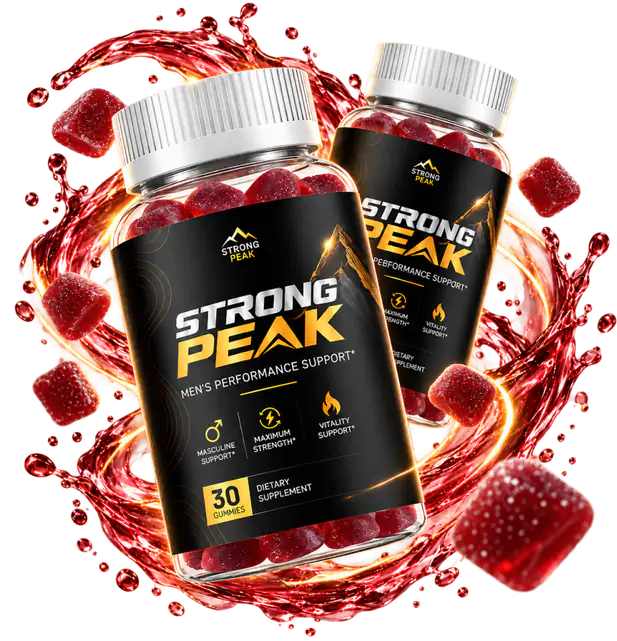
Strong Peak is presented as a daily gummy for men's energy, vitality and performance. Its practical features are clear: a chewable serving, a once-daily direction and a choice of package sizes. Health outcomes require a different kind of evidence.
A product can be convenient without being a proven treatment. An ingredient can have a research background without establishing the effect of every formula that contains it. Keeping those distinctions visible helps you decide what you are actually paying for.
Before considering a benefit, define it. Easier to take is a usability preference. Lower cost per bottle is arithmetic. Improved stamina, a hormone change or a measurable improvement in a medical condition would need evidence directed at that specific outcome. Strong Peak should be assessed with those categories kept separate.
The simplest benefit to assess is convenience
If you dislike swallowing capsules, a gummy format may be appealing. The stated routine is one gummy daily, so there is no dropper or small liquid volume to measure. That can make the task easier for some adults.
Convenience is still personal. Taste, texture, storage and the ability to chew comfortably can affect whether the format fits. Imagine an ordinary weekday rather than the tidy scene in a product image. The format should work in your actual surroundings.
The Strong Peak Gummies guide covers those details. You do not need to describe gummies as clinically superior to value a practical preference. A clear statement such as I prefer a chewable serving is more useful than a broad promise about faster or stronger effects.
A daily routine is not the same as a health result
Repeating a task can feel organized and reassuring. That feeling should not be mistaken for evidence that every item in the routine creates a measurable benefit. Consistency describes use, while effectiveness describes an outcome.
Keep your existing priorities in place. Suitable activity, meals, rest and prescribed care should not become secondary to an optional supplement. If a purchase would reduce the money or attention available for those needs, the balance deserves reconsideration.
Read the FDA supplement overview before treating a wellness formula as a replacement for care. The useful role of a supplement begins with understanding what it is, not with expecting it to solve every reason you feel less energetic than you would like.
Energy is a broad word
People use energy to describe alertness, motivation, stamina, recovery from a busy day or simply feeling less tired. A review that reports more energy does not tell you which change occurred or why it happened.
Ask what was observed and what else changed. Better sleep, a different workload, new activity or a treatment adjustment can occur during the same period as supplement use. A genuine personal experience may still have several possible explanations.
If fatigue is persistent, new or concerning, describe it to a healthcare professional. The timing and associated symptoms can matter. Do not make a supplement order the reason to wait before asking a question that needs a medical assessment. A clearer explanation of the problem is more useful than a larger bottle package.
Ginseng research should stay tied to its outcome
NCCIH's Asian ginseng overview describes some evidence for a small benefit in general fatigue, while noting disagreement across research. That is a narrower statement than saying ginseng reliably improves every form of performance.
It also concerns studied preparations, not an automatic result for Strong Peak. The gummy's amount and extract need to be compared with the research before a product-specific claim can be assessed. A shared botanical name is not the whole match.
The ingredients guide explains those label questions. A useful benefits discussion can acknowledge why ginseng attracts interest without converting that interest into a guarantee. The strength of the conclusion should match the actual evidence rather than the confidence of the sales wording.
Citrulline research does not establish broad male performance
L-citrulline is one of the headline ingredients. A small study indexed in PubMed investigated a specific outcome in men with mild erectile dysfunction. That does not establish the effect of a mixed gummy for every adult man's energy or stamina.
This distinction matters because performance is often used to connect several different expectations. Exercise ability, sexual function and ordinary fatigue are not interchangeable outcomes. Evidence for one cannot simply be moved into the others.
If a specific clinical concern is your reason for shopping, seek appropriate advice about that concern. Do not use a supplement's broad positioning to bypass the question of what is causing the problem or which treatment has evidence for your circumstances. The supplement decision should remain separate from diagnosis and care.
Maca and botanical combinations need proportionate claims
Maca is included in Strong Peak alongside other botanicals. A review of maca and sexual function found limited evidence and limitations in the available trials. That is research context, not a finished-product verdict.
The same discipline applies when several ingredients appear together. You cannot assign the strongest reported result to each ingredient and then add those results into a guaranteed combined benefit. The amounts, extracts and interactions within a formula need consideration.
The does Strong Peak work guide explains how to match a claim with evidence. A formula can be interesting while the effect of the exact combination remains uncertain. A buyer should not have to erase that uncertainty in order to compare the practical features and price.
Nutrient roles do not promise a noticeable boost
Vitamins B3 and B6, zinc and L-carnitine appear in the named formula. Explanations of their roles in the body can help describe why they are used. They do not automatically establish that extra supplementation produces a noticeable improvement for every person.
Read the amounts and consider the rest of your diet and supplement routine with appropriate professional advice. A product category such as men's wellness does not tell you whether another nutrient-containing formula overlaps with it.
Avoid treating an ingredient's necessity in normal biology as proof that more is better. That shortcut skips the very questions that matter for a supplement: the amount, the person taking it and the outcome being claimed. A precise label is more valuable than a long list of biological functions with no dose information.
Lower unit prices are a purchasing feature
Six bottles cost $294, or $49 per bottle, with listed free US shipping. That is lower per bottle than the two-bottle package at $79 each. It is also a larger upfront purchase.
A saving is useful only if the quantity fits your intended use and budget. Unused bottles do not become valuable because the unit price looked attractive. A smaller purchase can be the more sensible commitment when you are uncertain about the format or formula.
The Strong Peak price guide compares all three packages. Keep financial features in the purchasing column. The amount saved per bottle is not evidence of a health effect, and the amount spent should not become pressure to keep using a product when an unresolved concern appears.
The satisfaction promise is not proof of effectiveness
The seller offers a 60-day satisfaction promise from the original purchase date. That gives you a policy to read and potentially use. It does not demonstrate a clinical benefit or remove the need to examine return conditions.
Check how requests are made, what must be returned and which costs may apply. The six-bottle package is described as 180 days of supply, so its supply length is longer than the promise. Do not assume the two timelines match.
Our refund guide explains how to keep the record clear. A return promise can influence a purchase, but it should not be used to bridge a missing label, unresolved medicine question or expectation that the available evidence cannot support.
Testimonials cannot define the typical benefit
A customer story can tell you what one person says happened. It cannot establish what most buyers experience without information about how accounts were collected, checked and selected. A group of favorable stories does not supply that missing context.
The FTC review guide explains why you should not rely on appearance alone. A portrait, badge or confident first-person paragraph is not the same as a traceable evidence base.
Read customer reviews and complaints for a more practical assessment method. Specific service or usability details may help you. Health claims need additional scrutiny. Those categories should not be combined into one star score and then treated as proof of a typical result.
Safety changes the value of any potential benefit
A formula that seems convenient may still be inappropriate alongside a particular medicine or another supplement. The complete panel and your circumstances matter. A general description cannot answer that individualized question.
NCCIH's grape seed overview and its rhodiola resource illustrate why botanical ingredients deserve their own assessment. Familiarity with a plant name does not settle the combination question.
Use the side effects guide to prepare a discussion with a pharmacist or clinician. A lower price, gummy format or satisfaction promise cannot compensate for missing information about suitability. Settle the health question before deciding which commercial package to select.
Define your own practical value test
Write down what you would value if the product made no dramatic health promise. Perhaps the format suits you and the ingredients have been reviewed for your circumstances. Perhaps the label still leaves too much uncertainty for the price.
That exercise helps distinguish a real preference from an expectation created by broad language. If your main reason is a promised improvement in a medical condition, the evidence needs to support that outcome. A convenient format is not a substitute answer.
Read the full Strong Peak review and return to the homepage for the product overview. A good decision should remain understandable after you remove the largest discount banner, the strongest testimonial and the most ambitious benefit headline.
Put practical features and health claims in separate columns
Make a short note with two headings. Under practical features, record the format, stated serving, quantity and final price. Under health claims, record any outcome you expect the product to produce. Then ask what kind of evidence supports each entry.
A chewable serving is directly inspectable. A package total can be checked in the order summary. A claimed improvement in a medical condition requires a different standard. Keeping the columns separate prevents an easy-to-confirm feature from lending unsupported certainty to a harder claim.
If the health column is your main reason for buying, examine that evidence before comparing discounts. A convenient format cannot replace the outcome you actually want. If your interest is mainly usability and a professional has assessed the formula for you, there is no need to dress that preference up as a medical conclusion. A precise reason for buying is more useful than a broad expectation that the product will improve everything at once.
Describe a benefit without making it larger than the observation
Compare two statements: a gummy is easier for me to remember than a measured liquid; this formula transforms men's performance. The first identifies a personal practical experience. The second combines several possible outcomes without defining what changed.
Use the first kind of precision when assessing Strong Peak. State the feature, why it matters and what remains uncertain. This makes it easier to notice when your expectation has grown beyond the product information or research available.
If you later feel different, keep the description equally careful. Record the experience and other changes around the same time rather than declaring a cause from the sequence alone. A useful account does not have to be dramatic. It should help you and other readers understand what was actually observed, while leaving medical conclusions to evidence that can support them. That approach remains valuable whether your eventual decision is to continue, stop or choose not to reorder.
Keep commitment separate from quantity
Buying more is not a measure of how seriously you take your health. An informed smaller purchase, a professional consultation or a decision not to buy can all reflect careful judgment. Bottle count is a commercial quantity, not a personal virtue.
If you later decide the product does not fit, do not let the remaining supply force a positive interpretation of your experience. Reassess the actual issue. A sunk cost should not become an instruction to ignore symptoms, unclear directions or a changed medical situation.
Use the official website guide when you want to confirm the seller's current offer. Choose only when the formula, evidence, practical features and total make sense together. No single favorable feature should be asked to repair every unanswered question in the purchase.
Review the current offer.
Check the complete label, compare package totals and read the seller’s current terms before paying.
Visit Official Website Back to the package comparison